

...To get all news updates, Join our WhatsApp Group (Click Here)
Connect with us on Linkedin (Click Here)

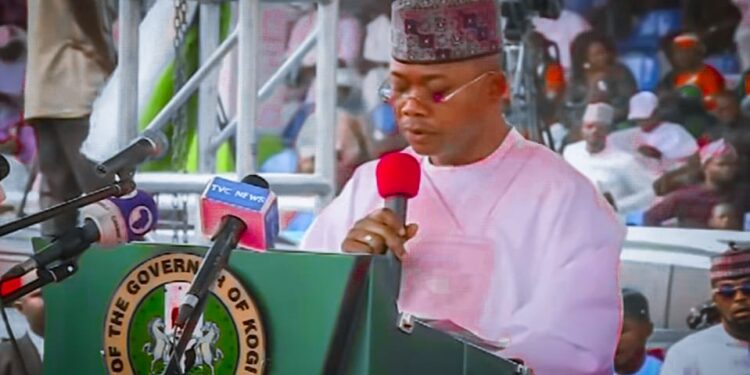
The Kogi State government, under the leadership of Governor Usman Ododo, has proposed a staggering N1.015billion for the remodelling of the Government House structure in the 2026 fiscal year, as revealed in the state’s draft budget document. This extravagant expenditure comes amidst growing concerns over the state’s debt servicing, with a significant portion of its Internally Generated Revenue (IGR) earmarked for debt repayment.
According to the Kogi State Medium-Term Expenditure Framework (MTEF) document, the state expects to spend 80.3% of its IGR on debt servicing between 2025 and 2027. In 2025, the state anticipates generating N35.1billion in IGR, with N27.9billion earmarked for debt servicing, representing 79.4% of the state’s revenue. This trend is expected to continue, with 80.4% and 81.1% of the state’s IGR allocated for debt servicing in 2026 and 2027, respectively.
The state’s revenue robustness is deemed weak, with about 80% of its revenue dependent on federal allocations, making it vulnerable to fluctuations in hydrocarbon sales. The International Monetary Fund (IMF) has expressed concerns over the state’s debt profile, citing a “very high risk” that its ability to cover debt service with its operating balance may weaken unexpectedly over the forecast horizon.
Critics argue that the state’s priorities are misplaced, pointing to the allocation of N500million for the construction of residential apartments for lawmakers and government officials on an “owner occupier basis”. This, they say, is a stark contrast to the state’s poor performance in critical sectors such as education, healthcare, and infrastructure.
A review of the Kogi State budget performance document for the first half of 2025 reveals that N28.1billion was spent on debt servicing, overshadowing allocations to vital sectors. The Ministry of Works and Planning received N17.2billion, while the Ministry of Education and Ministry of Health received N20.3billion and N12.3billion, respectively.
The state’s debt burden has raised concerns about its ability to meet its obligations, with the MTEF document warning of a potential debt crisis. The document notes that the state’s revenue is “influenced by the state’s overall weak socio-economic profile by international standards and reliance on volatile transfers from the federal government”.
The proposed expenditure on the Government House remodelling has sparked outrage, with many questioning the priorities of the state government. “It’s appalling that the state is prioritizing lavish spending on government facilities while neglecting critical sectors,” said a concerned citizen. “The government should focus on providing basic amenities and services to the people, not indulging in unnecessary extravagance.”
The Kogi State government has been urged to reconsider its budget priorities and focus on addressing the state’s pressing development needs. As the state prepares for the 2027 elections, the people of Kogi are demanding accountability and transparency in the management of public resources.
The state government’s response to these concerns has been inadequate, with some officials arguing that the expenditure is necessary for the state’s development. However, many are unconvinced, pointing to the state’s poor track record on governance and public finance management.
As the debate rages on, one thing is clear: the people of Kogi State deserve better governance and more prudent management of their resources. The state government’s priorities must be reordered to address the pressing needs of the people, rather than indulging in lavish spending on government facilities.
The international community is also watching the situation closely, with concerns over the state’s debt profile and governance practices. The IMF has warned that the state’s debt burden could have far-reaching implications for the country’s economic stability.
As the Kogi State government navigates these challenges, it must prioritize the needs of its citizens and demonstrate a commitment to transparency and accountability in governance. The people of Kogi State deserve no less.

...To get all news updates, Join our WhatsApp Group (Click Here)
Connect with us on Linkedin (Click Here)