

...To get all news updates, Join our WhatsApp Group (Click Here)
Connect with us on Linkedin (Click Here)

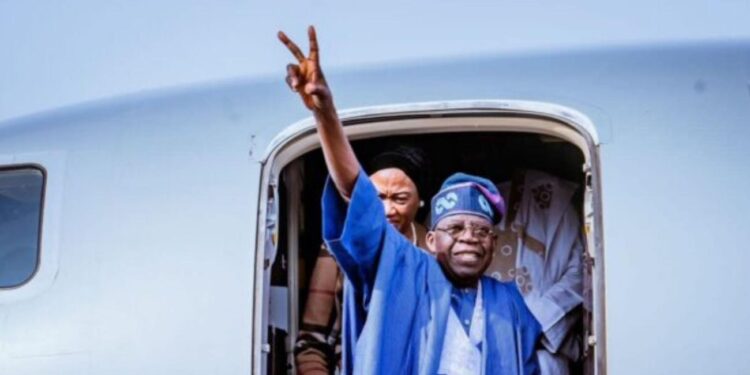
President Bola Tinubu’s administration has allocated N6.1 billion for international travels in the 2026 fiscal year, sparking concerns over the country’s financial constraints. The budget breakdown under State House operations reveals that the President also plans to spend N873 million on local travels during the same period. Vice President Kashim Shettima is expected to spend N1.3 billion on foreign trips, bringing the total expenditure on foreign trips to N7.4 billion.
The allocation has raised eyebrows, especially considering Nigeria’s economic challenges. Critics argue that the funds could be better spent on pressing national issues like healthcare, education, or infrastructure development. Peter Obi, a prominent opposition figure, has voiced concerns over the frequency of presidential trips, questioning their tangible outcomes.
In response, Nigeria’s Minister of Foreign Affairs, Ambassador Yusuf Maitama Tuggar, defended the presidency’s foreign trips, insisting that President Tinubu should embark on even more international travels to promote national interests and attract foreign investment.
A review of past expenditures shows that the Tinubu-led presidency spent N36 billion on international travels in 2024, with local travel costs adding up to N83 billion. The soaring costs have sparked debate, with some arguing that presidential trips can foster diplomatic ties and promote economic growth, while others question their effectiveness and value for money.
The controversy surrounding presidential travel expenses is not new. In 2025, the overhaul of the presidential aircraft’s engines was expected to cost N8.6 billion, further fueling concerns over excessive spending.
President Tinubu has presented the ₦58.18 trillion 2026 Appropriation Bill to the National Assembly, vowing stronger discipline in budget execution. The budget prioritizes security, infrastructure, education, and health, with allocations including ₦5.41 trillion for defence and security, ₦3.56 trillion for infrastructure, ₦3.52 trillion for education, and ₦2.48 trillion for health.
The President has also signalled an end to Nigeria’s practice of running multiple budgets in a single fiscal year, pledging to conclude existing budgets by March 2026. This move aims to improve budget implementation and reduce waste.
The 2026 budget is anchored on conservative assumptions, including a crude oil benchmark of $64.85 per barrel, oil production of 1.84 million barrels per day, and an exchange rate of ₦1,400 to the dollar. The budget deficit is projected at ₦23.85 trillion, representing 4.28% of GDP.
The budget has sparked debate, with some questioning its realism and others praising its focus on key sectors. As Nigeria navigates its economic challenges, the debate over presidential travel expenses highlights the need for transparency and accountability in government spending.

...To get all news updates, Join our WhatsApp Group (Click Here)
Connect with us on Linkedin (Click Here)