

Nigeria’s Fourth Republic has witnessed several high-profile impeachments of governors, often marked by controversy and subsequent court reversals. The recent declaration of a state of emergency in Rivers State and the suspension of Governor Siminalayi Fubara have brought the issue of impeachment back into the spotlight. If the process had been concluded, Fubara would have joined a notable list of Nigerian governors impeached since the return to democracy in 1999.
Here’s a comprehensive list of Governors impeached since 1999, with Senator Rashidi Ladoja’s story taking center stage.

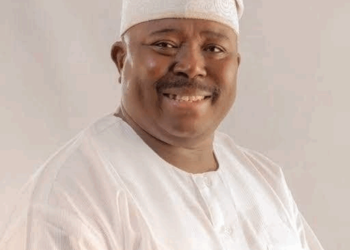
Rashidi Adewolu Ladoja (Oyo State)
Rashidi Adewolu Ladoja served as Oyo State governor from 2003 until his impeachment in January 2006. Lawmakers removed him amid a fierce political battle, with his deputy, Christopher Alao-Akala, sworn in as governor. Notably, a group of lawmakers known as the G12 demonstrated their allegiance to Ladoja by refusing bribes from late Chief Lamidi Ariyibi Akanji Adedibu and late Governor Adebayo Alao Akala. The courts later ruled in Ladoja’s favor, leading to his reinstatement in December 2006.
Ladoja claimed his impeachment was politically motivated, citing his refusal to support a third-term agenda for former President Olusegun Obasanjo. He recalled a meeting with Obasanjo, where the former president demanded his resignation, which Ladoja refused.
Diepreye Alamieyeseigha (Bayelsa State)

Diepreye Alamieyeseigha was the first civilian governor of Bayelsa State, elected in 1999 and re-elected in 2003. His tenure ended abruptly in 2005 when the Bayelsa State House of Assembly impeached him over allegations of corruption, abuse of office, and money laundering. Two years after his removal, Alamieyeseigha pleaded guilty to multiple corruption charges and was sentenced to prison, making his case one of the most prominent impeachment episodes in Nigeria’s political history.
Ayo Fayose (Ekiti State)
Ayo Fayose was elected governor of Ekiti State in 2003 but was impeached in October 2006 alongside his deputy, Biodun Olujimi. Lawmakers accused Fayose of mismanaging public funds, including allegations linked to the Ekiti State Poultry Project. The Supreme Court eventually ruled that Fayose’s impeachment was unlawful.
Peter Obi (Anambra State)
Peter Obi, later the Labour Party’s presidential candidate in 2023, was impeached as governor of Anambra State in 2006, just six months after assuming office. Obi has consistently argued that his removal was punishment for refusing to approve inflated budgets. The Court of Appeal nullified the impeachment, ruling that due process was not followed, and Obi was reinstated in February 2007.
Joshua Dariye (Plateau State)
Joshua Dariye’s tenure as governor of Plateau State was marked by political instability, culminating in his impeachment in November 2006. Although only eight lawmakers initiated the process, Dariye was removed and replaced by his deputy, Michael Botmang. The Supreme Court later ruled that the impeachment was invalid due to lack of quorum and reinstated Dariye.
Murtala Nyako (Adamawa State)
Murtala Nyako was impeached as governor of Adamawa State in July 2014 alongside his deputy, Bala Ngilari. Lawmakers accused Nyako of misappropriating over N17 billion, illegally deducting workers’ salaries, and misusing local government funds. Following his removal, then Speaker of the Adamawa State House of Assembly, Ahmadu Umaru Fintiri, was sworn in as acting governor.
Impeachment Remains Rare but Contentious
Since 1999, impeachments have remained relatively rare in Nigeria, often triggering legal battles and political crises. Many cases were later overturned by the courts, underscoring persistent concerns about due process, legislative independence, and the politicisation of impeachment. As political tensions continue in Rivers State and beyond, past impeachments serve as a reminder that removing an elected governor in Nigeria is as legally complex as it is politically charged.
The impeachment process in Nigeria is outlined in Section 188 of the 1999 Constitution, which requires a two-thirds majority vote in the state House of Assembly, followed by a trial by a panel of judges. However, the process has often been criticized for being politicized and lacking transparency.
In conclusion, the history of impeachments in Nigeria’s Fourth Republic highlights the complexities and challenges of democratic governance in the country. As the nation continues to navigate its democratic journey, it is essential to ensure that the impeachment process is used judiciously and in accordance with the constitution.